Boston Tea Party Letter
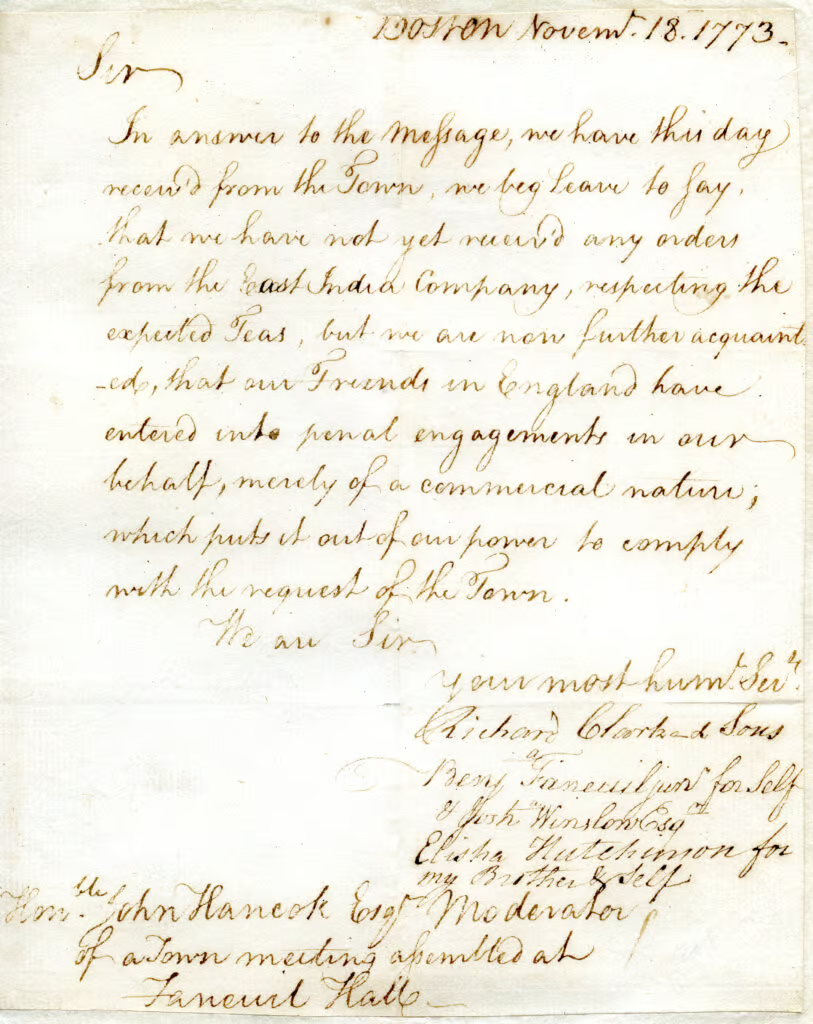
Boston Novemb. 18, 1773
Sir
In answer to the message, we have this day receiv’d from the Town, we beg leave to say, that we have not yet receiv’d any orders from the East India Company, representing the expected Teas, but we are now further acquainted, that our Friends in England have entered into final engagements in our behalf, merely of a commercial nature, which puts it out of our power to comply with the request of the Town.
We are Sir your most humble servants
Rickard Clarke & Sons
Benjamin Faneuil junior for Self & Josh Winslow Esq.
Elisha Hutchinson for my Brother & Self
the Hon. John Hancock Esq. Moderator of a Town meeting assembled at Faneuil Hall
The Boston Tea Party is one of the most iconic moments in the lead up to the American Revolution. It was the result of a few different acts passed by the British parliament that incurred taxes on goods imported to the colonies to recoup the costs of the French and Indian War.
The most notable was the Tea Act of 1773, which set taxes on imported tea and gave the East India Company a monopoly on tea imports to the colonies and the ability to appoint consignees to sell their wares throughout cities such as Boston. The people were livid – Samuel Adams pushed the mantra of “no taxation without representation” – and demanded that consignees in the Boston area resign and send East India ships docked in the harbor back to England without unloading the goods.
The consignees – who had ties to various wealthy merchant families and the governor of Massachusetts – wrote this letter in response to demands to resign. John Hancock read it aloud on December 16, 1773 to an audience of 7,000 at the Old South Church in Boston. Later that night, a group boarded the East India Company ships docked in the harbor and threw 342 chests of tea overboard.
- April and May 2025; rotating library display case