Mr Knife, Miss Fork
- Author: René Crevel
- Translator: Kay Boyle
- Illustrator: Max Ernst
- Publisher: Black Sun Press
- Place: Paris
- Year: 1931
From the book’s colophon:
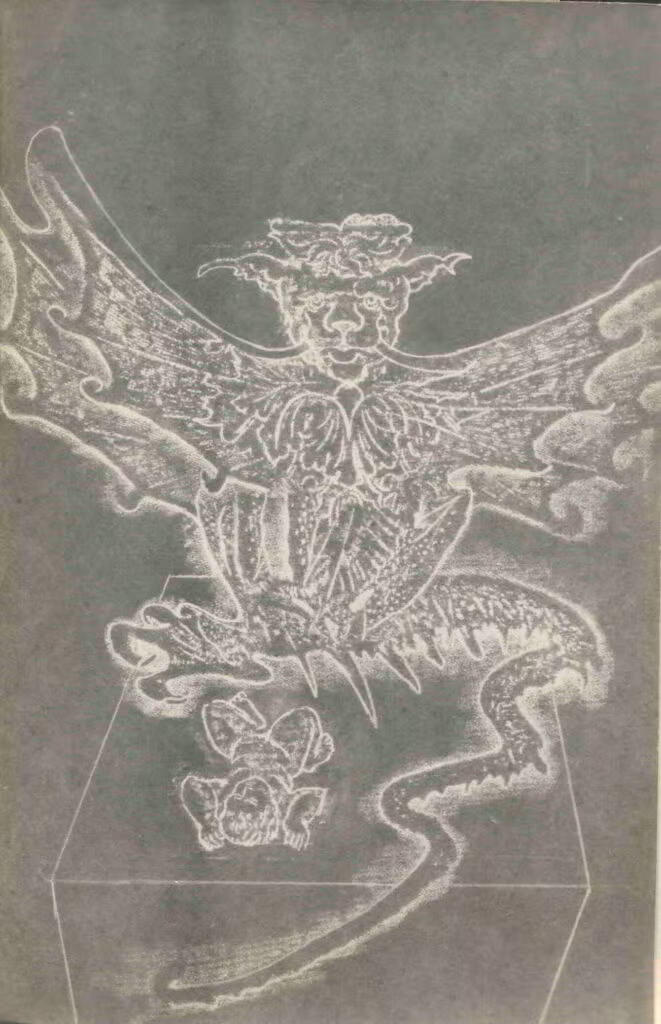
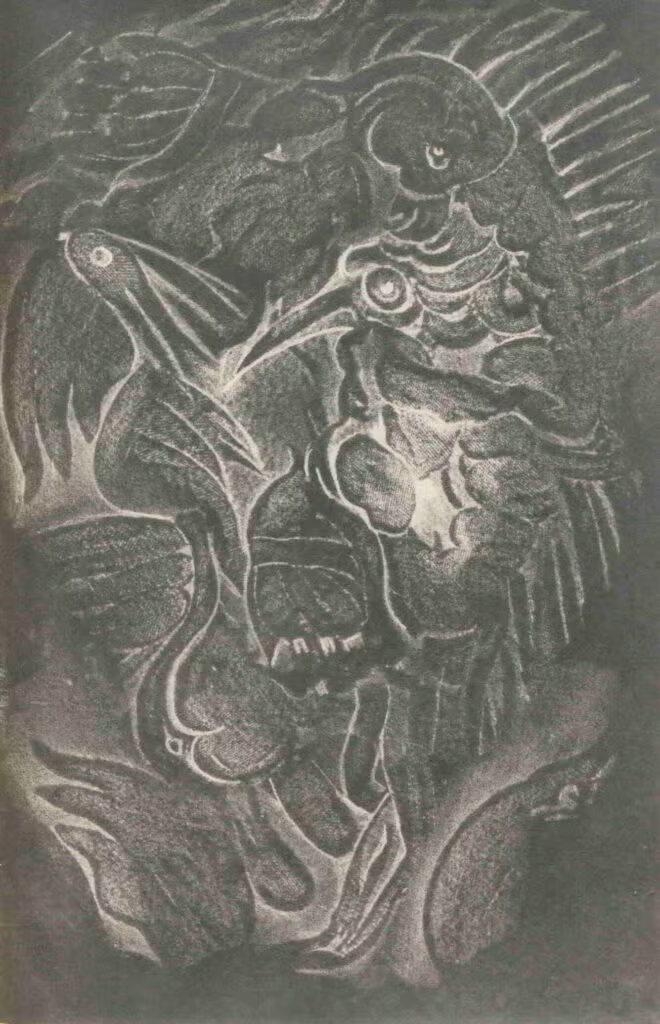
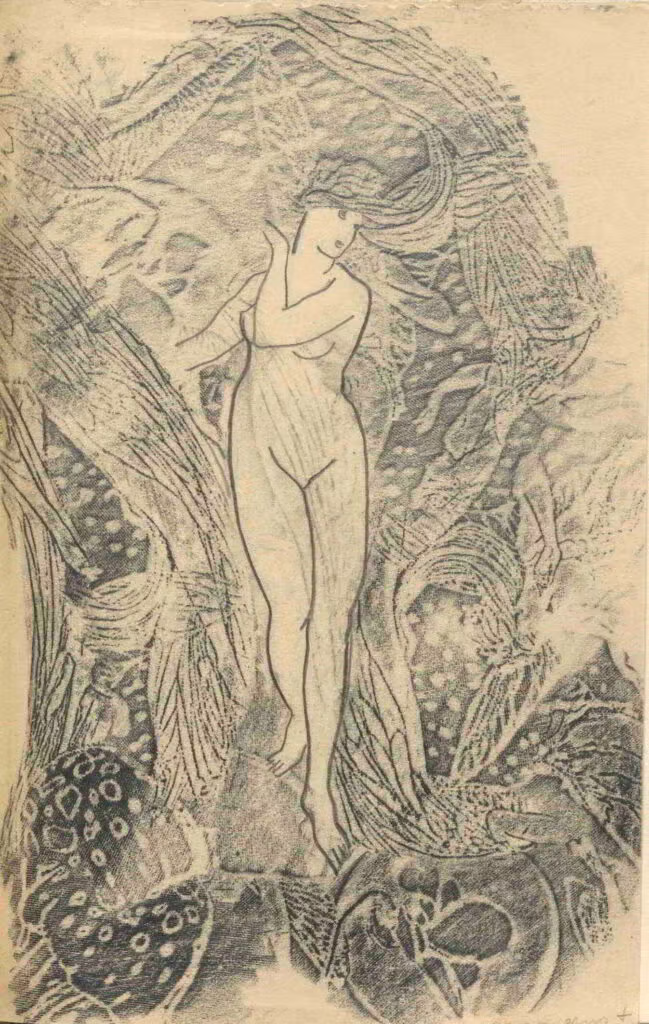
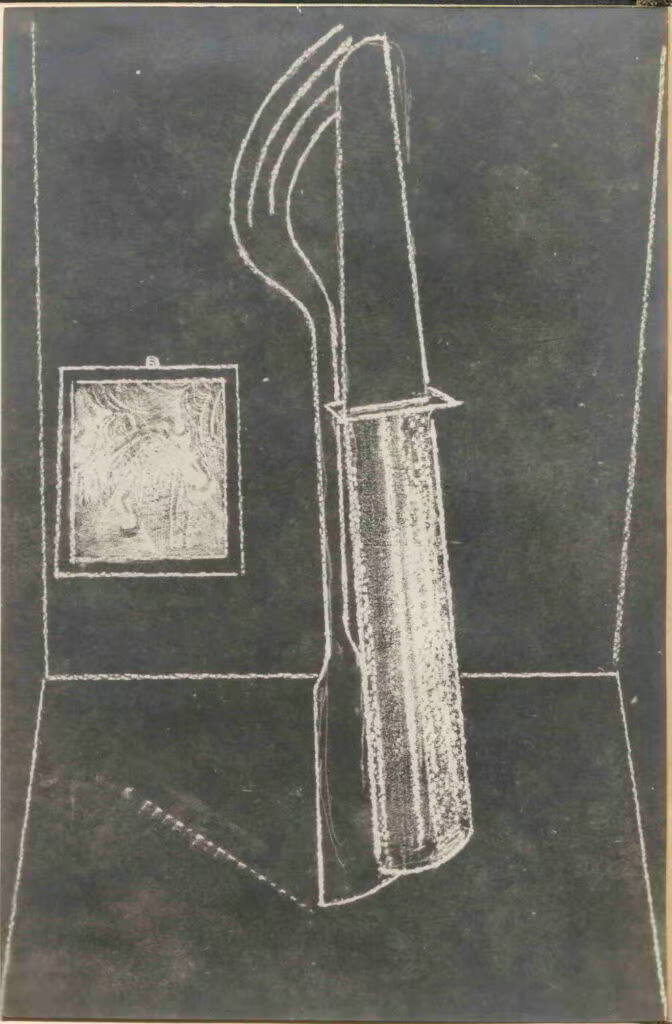
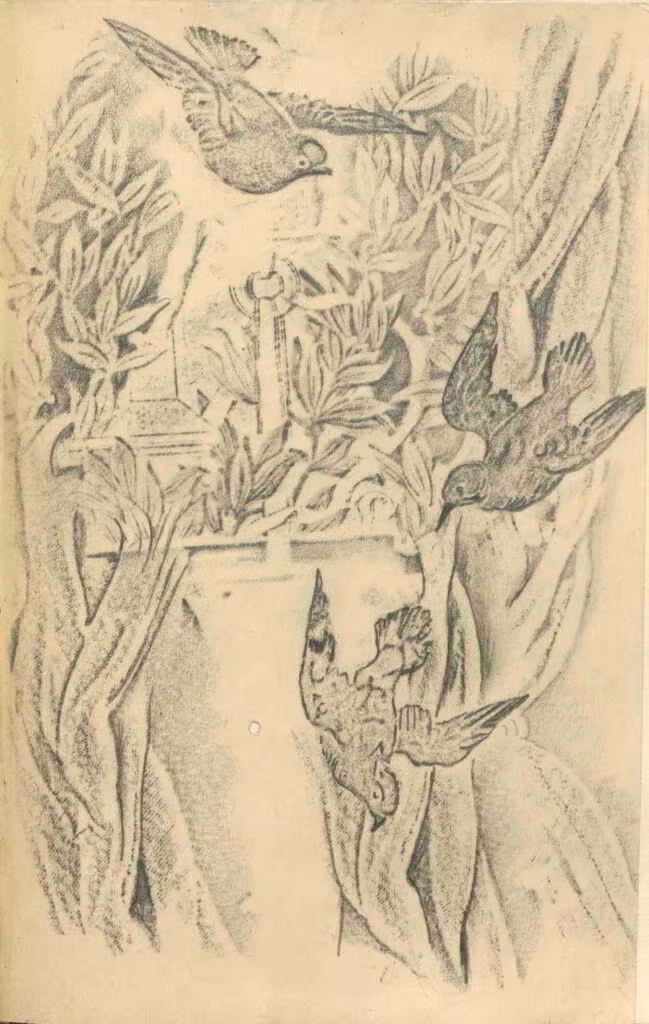
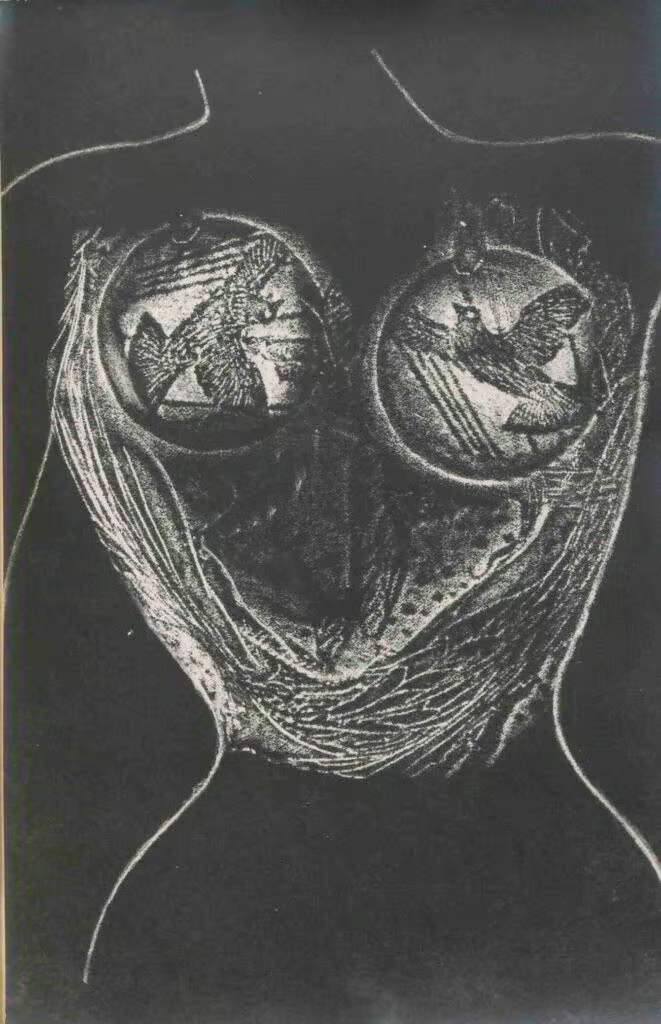
This edition of Mr. Knife Miss Fork being a fragment of the novel Babylone by René Crevel translated into English by Kay Boyle and illustrated with nineteen original photograms by Max Ernst, printed at the Black Sun Press, Paris, September 1931, is limited to 50 numbered copies on Hollande paper signed by the authors, 200 copies on finest bristol [sic] paper and also 5 special copies, each copy containing four of the original drawings.
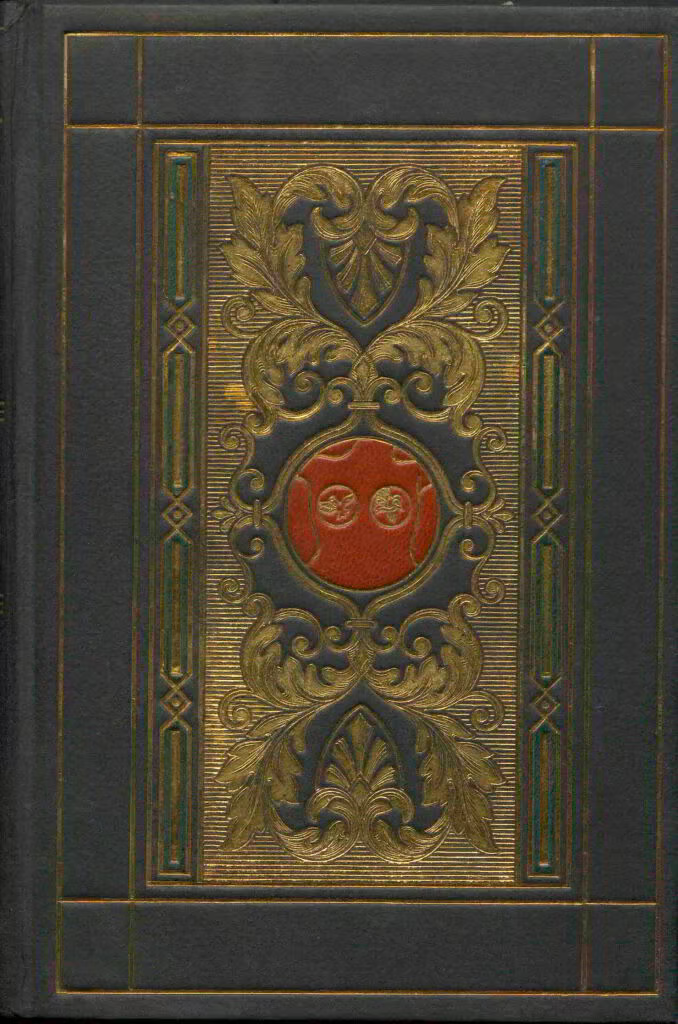
More specifically, this work is the first chapter of Crevel’s Babylone. The copy seen here is labeled as copy B, which indicates that it is one of the five special copies containing original drawings. This copy is also signed by Crevel on the title page. The process Ernst used to create the photograms is best described on the Art Institute of Chicago’s page about this work: “To make the photograms, Ernst first employed frottage, a technique that involves rubbing graphite on a piece of translucent paper (or tissue) placed upon a textured material. He then laid the tissue paper over a photosensitive paper to create a reverse image––effectively turning the rubbing into a photographic negative.” Illustrations aside, this volume is beautifully bound black buckram (also known as book cloth), and the covers and spine are decorated in gold tooling with blue and red highlights.
René Crevel was born in 1900 and passed away in 1935, living his entire life in Paris, France, with the occasional stints in sanitoriums in Switzerland for tuberculosis. Crevel wrote several novels, and was a member of the Dada and surrealist movements. Through his American artist lover, Eugene McCown, Crevel began to move in a more bohemian crowd and got to know Nancy Cunard, F. Scott Fitzgerald, Caresse and Harry Crosby, and others. In 1928, Crevel discovered he had tuberculosis, and in 1935 learned that he had renal tuberculosis. At approximately that same time he was in attendance at the first annual International Congress of Writers for the Defense of Culture, where one of his mentors physically accosted another attendee, leading to the entirety of the surrealist group to be kicked out of the conference. His continually failing health, the schism in his chosen family of surrealists, and his perpetual struggle with his own bisexuality led him to take his own life just a few weeks before his 35th birthday.
Max Ernst was born in Germany in 1891. He was drafted into the German army in 1914 and served for four years during WWI. The war had a profoundly detrimental impact on him, and in his memoire, he later wrote, “On the first of August 1914 M[ax].E[rnst]. died. He was resurrected on the eleventh of November 1918.”Ernst was a pioneer in the Dada movement and a prominent surrealist of the time, and he developed two new techniques:frottage, described above, and grattage, an analogous technique in which paint is scraped across canvas to reveal the imprints of the objects placed beneath. It was the frottage technique that he employed to illustrate this edition of Mr. Knife, Miss Fork.
- October and November 2026; rotating library display case